Conjunções e conectores de setenças, ideias e termos
Linking Words são palavras de ligação, ou seja, são conjunções e conectores que desempenham o papel de conectar sentenças, ideias e termos. Essas palavras podem expressar contraste, adição, causa e consequência ou tempo, por isso, compreendê-las é fundamental para interpretar textos em língua inglesa e compreender como as sentenças se relacionam.

As linking words são importantes para conectar ideias em um texto.
As linking words funcionam como peças essenciais na comunicação, pois contribuem com a coerência e coesão textuais. De maneira mais simplificada, elas podem expressar ideias de adição, contraste, causa e consequência, conclusão, oposição, comparação e tempo, dessa forma, veremos alguns exemplos abaixo:
Addition or similarity: conjunções que dão ideia de adição ou similaridade.
- AND - e
- IN ADDITION/BESIDES - além disso
- ALSO/TOO/AS WELL - também
- NOT ONLY… BUT ALSO... - não apenas, mas também
- Cause and consequence: conjunções que dão ideia de causa e consequência.
- BECAUSE/BECAUSE OF - porquê, por causa disso
- SINCE/AS - visto que, já que
- CONSEQUENTLY/AS A RESULT - consequentemente
- DUE TO - devido
- HEREFORE/THUS - portanto
Conclusion: conjunções que dão ideia de conclusão.
- SO - então
- AS A RESULT - como resultado
- ONCE - já que
Time and sequence: conjunção que dão ideia de tempo e sequência cronológica.
- FIRST - primeiramente, em primeiro lugar
- SECOND - em segundo lugar
- BEFORE - depois
- THEN, NEXT, AFTER THAT - em seguida
- FINALLY - finalmente
Vamos testar na prática? Observem abaixo o uso de Linking Words em um trecho de um artigo do The New York Times denominado “What you can do about coronavírus right now” com técnicas de prevenção contra o Coronavírus. Estre trecho fala sobre a importância de lavar as mãos com frequência e de maneira adequada:
Wash your hands often
As a general practice, think about washing your hands before you leave the house (protect others from your germs) and after you arrive at your destination (to remove germs you picked up from door knobs, elevator buttons, public transportation, etc.) You should also wash your hands before, during and after you prepare food. Wash hands before and after you eat, clean your house and change a diaper (you’re touching a baby!) Wash hands after you touch a shopping cart, use the bathroom, blow your nose, cough or sneeze, care for a pet and touch the garbage.
Disponível em: https://www.nytimes.com/interactive/2020/world/coronavirus-preparation-preparedness.html?action=click&module=Top%20Stories&pgtype=Homepage. Acesso em: 25 de março de 2020.
Let's Pratice!
Responda às questões abaixo sobre Linking Words.
QUESTÃO 1. (UNIFESP 2008)
Tracing the Cigarette’s Path From Sexy to Deadly
By Howard Markel, MD
In contrast to the symbol of death and disease it is today, from the early 1900s to the 1960s the cigarette was a cultural icon of sophistication, glamour and sexual allure – a highly prized commodity for one out of two Americans.
Many advertising campaigns from the 1930s through the 1950s extolled the healthy virtues of cigarettes. Fullcolor magazine ads depicted kindly doctors clad in white coats proudly lighting up or puffing away, with slogans like “More doctors smoke Camels than any other cigarette.”
Early in the 20th century, opposition to cigarettes took a moral rather than a health-conscious tone, especially for women who wanted to smoke, although even then many doctors were concerned that smoking was a health risk. (...)
(www.nytimes.com/2007/03/20/health. Adaptado.)
No trecho do terceiro parárafo do texto – … although even then many doctors were concerned that smoking was a health risk. – a palavra although significa, em português:
a. portanto
b. exceto
c. enquanto
d. conforme
e. embora
GABARITO: LETRA E
QUESTÃO 2. (UNIFESP 2015)
Healthy choices
How do we reduce waistlines in a country where we traditionally do not like telling individuals what to do?
By Telegraph View
22 Aug 2014
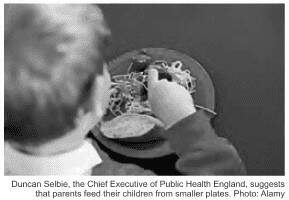
Every new piece of information about Britain’s weight problem makes for ever more depressing reading. Duncan Selbie, the Chief Executive of Public Health England, today tells us that by 2034 some six million Britons will suffer from diabetes. Of course, many people develop diabetes through no fault of their own. But Mr Selbie’s research concludes that if the levels of obesity returned to their 1994 levels, 1.7 million fewer people would suffer from the condition.
Given that fighting diabetes already drains the National Health Service (NHS) by more than £1.5 million, or 10 per cent of its budget for England, the impact upon the Treasury in 20 years’ time from unhealthy lifestyles could be catastrophic. 1Bad health not only impacts on the individual but also on the rest of the community.
Diagnosis of the challenge is straightforward. The tougher question is what to do about reducing waistlines in a country where we traditionally do not like telling individuals what to do.
It is interesting to note that Mr Selbie does not ascribe to the Big Brother approach of ceaseless legislation and nannying. 2Rather, he is keen to promote choices – making the case passionately that people should be encouraged to embrace good health. One of his suggestions is that parents feed their children from smaller plates. That way the child can clear his or her plate, as ordered, without actually consuming too much. Like all good ideas, this is rooted in common sense.
(www.telegraph.co.uk. Adaptado.)
No trecho do segundo parágrafo (ref. 1), “Bad health not only impacts on the individual but also on the rest of the community”, a expressão “not only … but also” indica uma ideia de:
a. negação
b. comparação
c. alternativa
d. inclusão
e. contraste
GABARITO: LETRA D
QUESTÃO 3. (VUNESP 2015)
Genetically modified foods
Genetically modified (GM) foods are foods derived from organisms whose genetic material (DNA) has been modified in a way that does not occur naturally, e.g. through the introduction of a gene from a different organism. Currently available GM foods stem mostly from plants, but in the future foods derived from GM microorganisms or GM animals are likely to be introduced on the market. Most existing genetically modified crops have been developed to improve yield, through the introduction of resistance to plant diseases or of increased tolerance of herbicides.
In the future, genetic modification could be aimed at altering the nutrient content of food, reducing its allergenic potential, or improving the efficiency of food production systems. All GM foods should be assessed before being allowed on the market. FAO/WHO Codex guidelines exist for risk analysis of GM food.
(www.who.int)
No trecho final do primeiro parágrafo “through the introduction of resistance to plant diseases”, o termo em destaque equivale, em português, a:
a. embora
b. por meio de
c. durante
d. dentre
e. também
GABARITO: LETRA B
Professora Gabriela De-Gino